

Metric DIN 912 screws, featuring a hexagonal socket drive, are vital fasteners offering strength and reliability.
Comprehensive dimensions and size charts, often available as a PDF, are crucial for successful project implementation.
What are Socket Head Cap Screws?
Socket head cap screws (SHCS) are cylindrical fasteners with a recessed hexagonal drive, designed for use with an Allen key or hex wrench. This internal drive allows for high torque application in confined spaces, making them superior to externally wrenched fasteners in many applications. They are commonly manufactured to the metric DIN 912 standard, ensuring interchangeability and quality.
Understanding their dimensions is critical for proper selection. Detailed metric size charts, frequently available as downloadable PDF resources, outline key parameters like diameter, thread pitch, and head height. These charts are essential for engineers and technicians to ensure compatibility and optimal performance within their designs. Aspen Fasteners provides an extensive range, emphasizing safety, reliability, and economy.
DIN 912 Standard Overview
The DIN 912 standard specifically defines the specifications for metric hexagon socket head cap screws. It covers crucial dimensions, including thread size (M3 to M36 typically), head diameter, and length. Adherence to this standard guarantees consistency and interchangeability across different manufacturers and applications. Detailed PDF documents outlining the standard are readily available from fastener suppliers like Aspen Fasteners.
These documents provide precise tolerances for each dimension, ensuring proper fit and function. Understanding DIN 912 is vital for engineers selecting fasteners for critical applications. The standard promotes safety, reliability, and economy through its rigorous requirements, ensuring high-quality fasteners suitable for diverse industrial needs.
Understanding Metric Dimensions
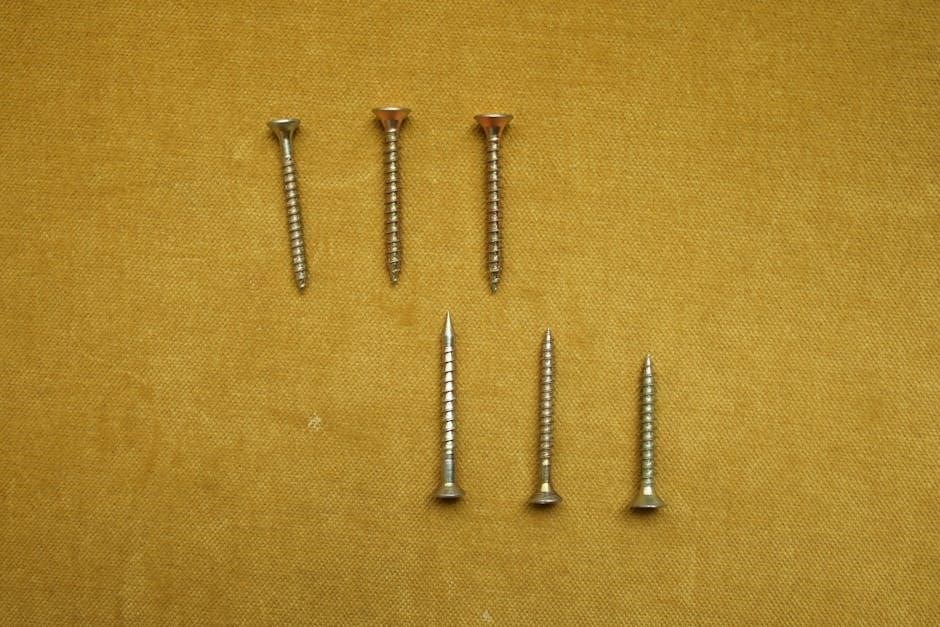
Precise metric dimensions – diameter, pitch, and length – are fundamental to socket head cap screws. PDF charts detail these, ensuring correct selection.
Basic Screw Diameter (d)
The basic screw diameter, denoted as ‘d’, represents the outer diameter of the screw’s threaded portion. This is the foundational dimension for all other related measurements and is expressed in millimeters within the metric system. Accurate determination of ‘d’ is paramount for ensuring compatibility with tapped holes and nuts. PDF resources and size charts, like those available from Aspen Fasteners, clearly illustrate the standard diameters available, typically ranging from M3 to M36.
Selecting the correct diameter is critical for load-bearing capacity and preventing stripping of threads. These charts often include detailed dimensions for various screw sizes, aiding engineers and technicians in precise component selection. Understanding this fundamental dimension, alongside the thread pitch, is essential for successful assembly and the overall structural integrity of any mechanical project utilizing socket head cap screws.
Thread Pitch (P)
Thread pitch, represented as ‘P’, defines the distance between adjacent thread crests on the screw. Expressed in millimeters, it’s a crucial dimension for determining how tightly the screw engages with the threaded hole or nut. Standard metric threads follow a defined relationship between diameter and pitch; coarser threads are suitable for softer materials, while finer pitches offer greater strength and precision. Detailed PDF guides, often found alongside metric socket head cap screw size charts, provide specific pitch values for each diameter.
Correct pitch selection prevents issues like cross-threading and ensures optimal clamping force. These resources from suppliers like Aspen Fasteners are invaluable for engineers needing precise specifications. Ignoring the thread pitch can lead to assembly failures and compromised structural integrity, highlighting its importance in any mechanical application.
Head Diameter (dk)
The head diameter, denoted as ‘dk’, is a critical dimension influencing the screw’s bearing surface and overall footprint. It’s measured across the widest point of the hexagonal head and impacts the required clearance in the assembly. Metric socket head cap screws adhere to standardized head diameter values corresponding to their nominal diameter. Comprehensive PDF resources, including size charts, detail these specifications for various M sizes (M3 to M36).
Understanding ‘dk’ is essential for ensuring the screw head doesn’t interfere with surrounding components. Suppliers like Aspen Fasteners provide detailed dimensions in their catalogs. Accurate head diameter selection contributes to a secure and stable mechanical connection, preventing issues like binding or stress concentration.

Key Dimensions & Tolerances
Precise dimensions – head height, under-head clearance, and screw length – are vital for proper fit. PDF charts detail these tolerances for metric screws.
Head Height (k)
The head height, designated as ‘k’ in metric socket head cap screw dimensions, represents the overall height of the screw head from the bearing surface. This dimension is critical for ensuring adequate clearance and preventing interference with mating components. Accurate head height is essential for proper assembly and functionality.
Detailed PDF resources and size charts, like those offered by Aspen Fasteners, provide specific ‘k’ values for various screw sizes (M3 to M36). These charts typically list ‘k’ alongside other key dimensions, allowing engineers and technicians to select the appropriate screw for their application. Variations in head height can occur based on the screw’s material grade and manufacturing tolerances, so referencing a reliable dimensional chart is always recommended. Understanding this dimension ensures optimal performance and avoids potential issues during installation.
Under Head Clearance (CF)
The ‘CF’ dimension, representing under head clearance, is a crucial specification in metric socket head cap screw dimensions. It defines the minimum space required between the underside of the screw head and the surface it’s bearing against, allowing for proper seating without deformation. Insufficient clearance can lead to stress concentration and potential failure.
PDF dimensional charts, often available from fastener suppliers, detail ‘CF’ values for each screw size. These charts, covering sizes from M3 to M36, are essential for design engineers. Variations in ‘CF’ can depend on the screw’s head style and material. Accurate specification of under head clearance, as found in these resources, ensures reliable assembly and prevents damage to components. Proper clearance contributes to the overall integrity and longevity of the fastened joint.
Screw Length (s)
The ‘s’ dimension signifies the overall length of the metric socket head cap screw, measured from under the head to the tip of the threads. This is a fundamental parameter when selecting the correct fastener for an application, ensuring sufficient engagement without protruding excessively. Accurate length determination is vital for secure and reliable assemblies.
Detailed PDF dimensional tables, commonly provided by fastener manufacturers, list standard lengths for each screw diameter. These resources typically cover the M3 to M36 range. Non-standard lengths are often available upon request; Correctly referencing these charts prevents issues like insufficient thread engagement or interference with adjacent components. Precise screw length selection, guided by these PDFs, is paramount for optimal performance and structural integrity.

Material Grades & Strength
Metric socket head cap screws utilize various steel grades, like 12.9, impacting strength. PDF resources detail material properties and dimensions.
Class 12.9 Steel Properties
Class 12.9 steel represents a high-strength alloy commonly used in manufacturing metric socket head cap screws. This grade offers exceptional tensile strength, typically exceeding 1200 N/mm², and a yield strength around 1090 N/mm². These properties ensure durability and reliability in demanding applications.
The ‘12.9’ designation indicates both the ultimate tensile strength (1200 MPa) and the yield strength (900-1100 MPa). Heat treatment processes are crucial in achieving these characteristics. Detailed dimensions and mechanical properties are often found within comprehensive PDF guides.
Choosing Class 12.9 ensures resistance to deformation and failure under significant loads. Understanding these specifications, often detailed in downloadable charts, is vital for engineers and designers selecting fasteners for critical assemblies. Proper material selection directly impacts the longevity and safety of the final product.
Other Common Material Grades
Beyond Class 12.9, several other material grades are frequently employed in metric socket head cap screws, catering to diverse application requirements. Stainless steel (A2 and A4) provides excellent corrosion resistance, ideal for outdoor or harsh environments. A2 stainless steel offers good strength, while A4 delivers superior resistance to chloride corrosion.
Grade 8.8 steel is a popular choice offering a balance of strength and cost-effectiveness. It’s suitable for less demanding applications. Detailed dimensions and material specifications are readily available in comprehensive PDF resources.

Selecting the appropriate grade depends on factors like load, temperature, and environmental conditions. Understanding these nuances, often outlined in fastener charts, ensures optimal performance and longevity. Always consult detailed material data sheets for precise mechanical properties and compatibility information.
Socket Size & Drive Type
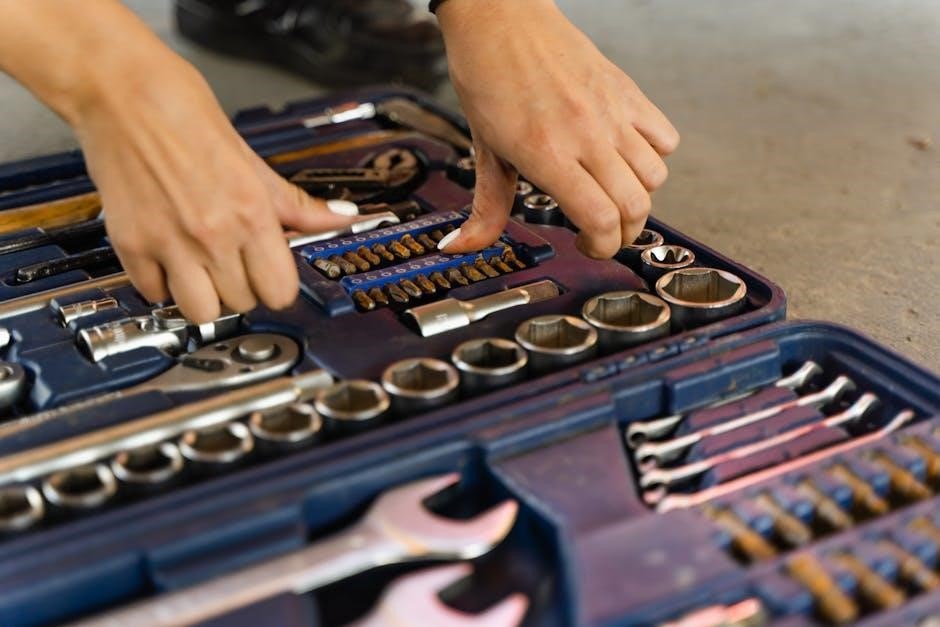
Metric socket head cap screws utilize a hexagonal socket, requiring an Allen key or wrench for installation. PDF resources detail specific drive sizes.
Hex Socket Size (DW)
The hex socket size, denoted as DW, is a critical dimension for ensuring proper Allen key or wrench engagement with metric socket head cap screws. Accurate DW values are essential to prevent stripping of the screw head or damage to the driving tool. PDF documentation and size charts typically provide detailed DW measurements for each screw size, ranging from M3 to M36.
These charts correlate the screw diameter (d) with the corresponding hex socket dimension (DW). Understanding this relationship is vital for selecting the correct tool and achieving a secure fastening. Variations in DW can occur based on manufacturing tolerances and material grades. Therefore, referencing a reliable metric fastener dimension PDF is highly recommended for precise applications, especially in industries demanding high precision and reliability, like automotive and machinery.
Allen Key/Wrench Compatibility
Ensuring correct Allen key or wrench compatibility with metric socket head cap screws is paramount for efficient assembly and preventing damage. Detailed dimension PDFs and size charts specify the precise hex socket size (DW), directly correlating to the required tool size. Using an incorrect size can lead to stripping of the screw head, compromising the joint’s integrity.
Standard Allen keys and wrenches are available in both metric and imperial sizes; therefore, confirming the fastener’s metric designation is crucial. These resources often include conversion tables for easy reference. Selecting high-quality tools made from hardened steel is recommended for optimal torque transfer and longevity. Always consult a reliable metric fastener PDF for accurate compatibility information, particularly for critical applications demanding precision and reliability.

Size Charts & Tables
Detailed metric size charts, frequently available as downloadable PDF resources, are essential for selecting the correct socket head cap screw dimensions for your project.
Comprehensive Metric Size Chart (M3 ─ M36)
Our extensive metric size chart covers a broad range of socket head cap screws, specifically from M3 to M36. This chart meticulously details critical dimensions, including basic screw diameter (d), thread pitch (P), head diameter (dk), head height (k), and screw length (s).
Furthermore, it provides essential data like under head clearance (CF) and external wrench size (ETW). These specifications are often conveniently compiled into a downloadable PDF format for easy access and reference during design and procurement. Accurate dimensions are paramount for ensuring proper fit and functionality in various applications.
The chart also reflects adherence to standards like DIN 912 and ISO 4762, guaranteeing compatibility and quality. Utilizing this resource minimizes errors and optimizes the performance of your assemblies. Always consult the PDF for the most up-to-date information.
Downloadable PDF Resources
Accessing detailed socket head cap screw dimensions is simplified through our readily available PDF resources. These comprehensive guides consolidate critical data, including metric size charts (M3-M36), adhering to DIN 912 and ISO 4762 standards.
Our PDFs present clear tables outlining screw diameters, thread pitches, head diameters, lengths, and under-head clearances. They are invaluable for engineers, designers, and procurement professionals. These resources ensure accurate fastener selection and compatibility within your projects.
Downloadable formats allow for offline access and easy sharing. We also offer specialized PDFs focusing on material grades and strength classifications, like Class 12.9 steel. Utilizing these resources streamlines your workflow and minimizes potential errors related to fastener dimensions.
Applications & Industries
Metric socket head cap screws are essential in automotive, machinery, and equipment, demanding precise dimensions. PDF resources aid correct fastener selection.
Automotive Industry Uses
The automotive industry heavily relies on metric socket head cap screws for numerous critical applications, demanding high strength and precise dimensions. These fasteners secure engine components, chassis parts, and interior elements, ensuring vehicle safety and performance.
Applications range from fastening cylinder heads and exhaust manifolds to securing brake systems and suspension components. The availability of detailed metric size charts, often in PDF format, is crucial for automotive engineers and technicians. These charts guarantee correct fastener selection, preventing assembly issues and potential failures.
Using the correct screw size, thread pitch, and head type, as outlined in these resources, is paramount; The industry’s need for reliability and consistent performance makes accurate dimension referencing, via downloadable PDF guides, absolutely essential for maintaining quality control throughout the manufacturing and maintenance processes.
Machinery & Equipment Applications
Metric socket head cap screws are indispensable in machinery and equipment assembly, where robust fastening solutions are paramount. They secure components in diverse applications, including industrial robots, manufacturing equipment, and agricultural machinery. Their strength and reliability contribute to operational efficiency and longevity.
Precise dimensions are critical in these applications, and readily accessible metric size charts – frequently available as a PDF – are essential for engineers and maintenance personnel. These charts detail crucial parameters like diameter, thread pitch, and head height, ensuring proper fit and function.
Correct fastener selection, guided by these PDF resources, minimizes downtime and prevents costly repairs. The ability to quickly reference detailed dimension specifications streamlines maintenance procedures and guarantees the integrity of complex machinery systems, upholding safety standards and maximizing productivity.
Customization Options
Beyond standard sizes, metric screws offer customization, including specialty heads and lengths. Detailed dimension specifications, often found in a PDF, aid tailored solutions.
Specialty Head Types
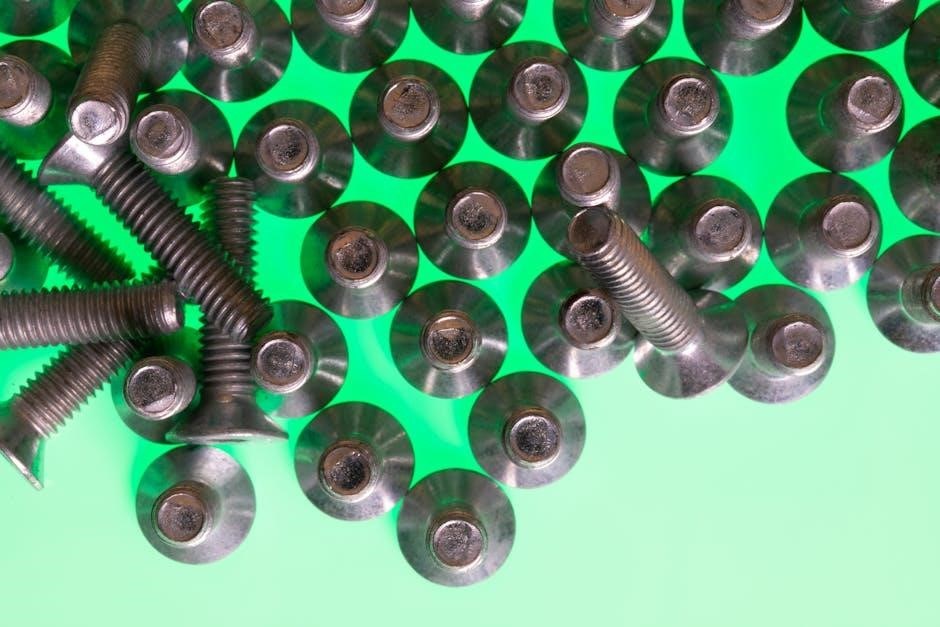
While the standard cylindrical head is common, metric socket head cap screws are available with various specialty head configurations to suit diverse applications. These include button head screws, offering a lower profile and cleaner aesthetic, and flat head screws designed to sit flush with the mounting surface.
Furthermore, flange head screws distribute load over a wider area, reducing stress on the material being fastened. Understanding the precise dimensions – head diameter (dk), head height (k), and under head clearance (CF) – is critical when selecting a specialty head.
Detailed dimension charts, frequently provided in PDF format by fastener suppliers, illustrate these variations. These resources are invaluable for engineers and designers ensuring proper fit and functionality within their designs, especially when non-standard configurations are required. Careful consideration of these options optimizes performance and aesthetics.
Non-Standard Lengths & Materials
Beyond standard sizes (M3-M36), metric socket head cap screws can be sourced in non-standard lengths to accommodate unique design requirements. Custom lengths are often crucial in specialized machinery or equipment where off-the-shelf options are insufficient. Material choices extend beyond common grades like 12.9 steel.
Options include stainless steel for corrosion resistance, titanium for lightweight applications, and alloy steels for enhanced strength. Precise dimensions, including screw length (s) and thread engagement, are paramount when specifying non-standard components.
Detailed dimensional data, often available as a downloadable PDF from fastener manufacturers, is essential for accurate ordering and assembly. These resources ensure compatibility and prevent costly errors. Always verify tolerances and material specifications to guarantee optimal performance and longevity in your application.