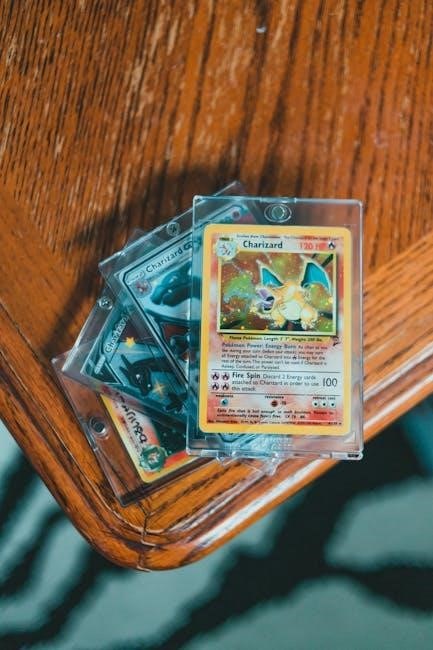

The Complete Pokémon Pocket Guide
Canva’s recent acquisitions, like Affinity, demonstrate a shift in creative tools. The Pokémon TCG’s “Fantastical Parade” expansion offers diverse deck options, featuring powerful cards like Mega Kangaskhan ex.
The Pokémon Trading Card Game (TCG), a cornerstone of the Pokémon franchise, extends the world of Pokémon into a strategic card game experience. Originating in 1996, alongside the popular video games, the TCG quickly became a global phenomenon, captivating players with its blend of collectible cards and competitive gameplay.
At its core, the Pokémon TCG revolves around building a deck of 60 cards, featuring Pokémon, Energy, and Trainer cards. Players strategically utilize these cards to battle against opponents, aiming to knock out their Pokémon and claim victory. The game’s enduring appeal lies in its constantly evolving metagame, driven by new card expansions and innovative strategies.
Recent expansions, such as “Fantastical Parade,” continually introduce fresh dynamics, offering players new Pokémon, abilities, and deck-building possibilities. Canva, while primarily a design tool, reflects the broader creative landscape influencing the TCG community’s presentation and engagement. Understanding the game’s fundamentals, from card types to battling mechanics, is crucial for both newcomers and seasoned players seeking to master the art of Pokémon battling.
Understanding Pokémon Card Types
Pokémon cards are categorized into several distinct types, each influencing gameplay and strategic deck construction. The primary types – Grass, Fire, Water, Lightning, Psychic, Fighting, Darkness, Metal, and Fairy – dictate strengths and weaknesses in battle, creating a rock-paper-scissors dynamic. Understanding these interactions is fundamental to success.
Beyond Pokémon themselves, the TCG features crucial supporting card types. Energy cards power up Pokémon attacks, while Trainer cards provide a diverse range of effects, from healing Pokémon to disrupting opponents. Trainer cards are further divided into Item, Supporter, and Stadium cards, each with unique usage restrictions and strategic advantages.
Recent expansions, like “Fantastical Parade,” introduce cards that may bend or challenge traditional type matchups, demanding adaptable strategies. Tools like Canva, though not directly involved in gameplay, demonstrate the growing emphasis on visual presentation within the TCG community. Mastering the nuances of each card type and their interplay is essential for building a competitive and resilient deck.

Basic Card Anatomy: A Visual Guide

A Pokémon card’s layout is standardized for clarity and ease of play. At the top, you’ll find the Pokémon’s name, HP (Hit Points), and type; Below this is a vibrant illustration, often showcasing the Pokémon in dynamic action. Crucially, the card displays attack costs – the Energy required to use each attack – and the damage they inflict.
The lower portion details the Pokémon’s Weakness, Resistance, and Retreat Cost. Weakness multiplies damage taken from specific types, while Resistance reduces it. Retreat Cost dictates how much Energy is needed to switch the Pokémon out of the Active Spot.
Trainer cards feature text boxes explaining their effects, while Energy cards simply provide the necessary energy type. Understanding these elements, alongside rarity symbols, is vital. Even tools like Canva, used for creating fan art or promotional materials, reflect this standardized design. Familiarizing yourself with this anatomy unlocks a deeper understanding of the game’s mechanics and strategic possibilities.
Pokémon Card Rarity Symbols Explained
Pokémon cards are categorized by rarity, indicated by a symbol in the bottom right corner. The most common are represented by a circle (●), signifying a common card. Less frequent are uncommon cards, marked with a diamond (♦). These form the foundation of many decks, providing essential support.
Rare cards boast a star (★) symbol, and are generally more powerful or sought-after. Holo Rare cards feature foil patterns, adding visual appeal and collectibility. Even rarer are Ultra Rare cards, including Pokémon-EX, Pokémon-V, and Full Art cards, often displaying extended artwork and unique mechanics.

Secret Rare cards, denoted by a star with an additional symbol, are the most elusive. The recent “Fantastical Parade” expansion introduced new variations, increasing collectibility. Like designs created in tools such as Canva, rarity impacts value and desirability. Understanding these symbols is crucial for both gameplay and collecting, influencing deck building and market value.
Energy Cards: Fueling Your Pokémon
Energy cards are the lifeblood of any Pokémon TCG deck, providing the necessary power to activate Pokémon attacks. Represented by various types – Grass, Fire, Water, Lightning, Psychic, Fighting, Darkness, Metal, and Fairy – they must match the energy type required by the attack.
Basic Energy cards are the most common, simply providing one unit of their respective energy type. Special Energy cards offer additional effects, such as providing multiple energy or granting immunity to certain attacks. Strategic energy management is paramount; knowing when to attach, discard, or recycle energy is key to victory.
Similar to utilizing design elements in a program like Canva, effective energy usage requires planning. Decks often focus on a specific energy type for synergy. The “Fantastical Parade” expansion introduced cards that manipulate energy, adding layers of complexity. Without sufficient energy, even the most powerful Pokémon remain dormant, highlighting their critical role in battle.
Trainer Cards: Items, Supporters, and Stadiums
Trainer cards are essential components of a Pokémon TCG deck, providing support and strategic advantages beyond Pokémon abilities and attacks. They fall into three main categories: Item, Supporter, and Stadium cards, each with unique functions and limitations.
Item cards offer immediate effects and can be played multiple times per turn. Supporters provide powerful, one-time effects and limit you to one play per turn. Stadium cards remain in play, affecting both players until replaced by another Stadium.
Like utilizing diverse tools within a platform such as Canva for varied design outcomes, Trainer cards offer flexibility. They can draw cards, search your deck, heal Pokémon, or disrupt your opponent’s strategy. The recent “Fantastical Parade” expansion introduced new Trainer cards that synergize with specific Pokémon archetypes. Mastering Trainer card usage is crucial for controlling the flow of battle and maximizing your deck’s potential.
Pokémon Abilities: A Deep Dive
Pokémon Abilities are a defining characteristic of many cards, offering passive effects that influence gameplay. These abilities can range from boosting attack power to providing defensive benefits or disrupting the opponent’s strategy. Understanding Abilities is crucial for maximizing a Pokémon’s potential and building synergistic decks.
Abilities activate under specific conditions, such as when the Pokémon is played, during your turn, or in response to an opponent’s action. Some Abilities are continuous, providing a constant effect, while others are triggered, activating only once. Like the diverse tools available in Canva for creative projects, Abilities offer a wide range of effects.
The “Fantastical Parade” expansion introduced several new Abilities, enhancing deck-building possibilities. Strategic deck construction often revolves around exploiting Pokémon Abilities, creating powerful combinations and controlling the battlefield. Mastering Abilities is key to competitive play and unlocking a Pokémon’s full strategic depth.
Pokémon Attacks: Damage, Cost, and Effects
Pokémon attacks are the primary method of battling in the TCG, each possessing a damage value, Energy cost, and often, additional effects. Understanding these components is fundamental to effective gameplay. The Energy cost dictates how much Energy must be attached to the Pokémon to use the attack, while the damage value determines the amount of damage inflicted on the opposing Pokémon.
Beyond raw damage, attacks frequently include secondary effects, such as inflicting status conditions (like Burn or Poison), discarding cards, or healing damage. These effects can dramatically alter the course of a battle, adding layers of strategic complexity. Similar to utilizing diverse features within Canva for design, players must carefully select attacks based on the game state.
The recent “Fantastical Parade” expansion features attacks with innovative effects, encouraging creative deck-building. Analyzing attack costs and potential effects is vital for optimizing your strategy and maximizing your chances of victory. Mastering attack mechanics is essential for competitive success.
Evolution Stages: Basic, Stage 1, and Stage 2
Pokémon cards come in three primary evolution stages: Basic, Stage 1, and Stage 2. Basic Pokémon are the starting point, able to enter play directly from your hand. Stage 1 Pokémon evolve from Basic Pokémon, and Stage 2 Pokémon evolve from Stage 1 Pokémon. Each evolution typically grants increased HP, stronger attacks, and potentially, new Abilities.
Evolving Pokémon is a core mechanic of the TCG, allowing players to build progressively more powerful creatures throughout the game. However, evolving takes time and resources – specifically, attaching Energy cards to pay the evolution cost. Strategic timing is crucial; evolving too early can leave you vulnerable, while waiting too long might hinder your offensive capabilities.
Similar to how Canva allows iterative design improvements, Pokémon evolution represents a gradual power increase. The “Fantastical Parade” expansion showcases Pokémon with compelling evolution lines, offering diverse strategic options. Understanding the benefits and drawbacks of each stage is key to building a successful deck.
The Pokémon TCG Rulebook: Key Regulations
The Pokémon Trading Card Game operates under a specific set of rules governing gameplay. Players begin with a 60-card deck, adhering to limitations on the number of copies of a card allowed (typically four, excluding Basic Energy cards). A player wins by taking all six Prize cards, knocking out all opponent’s Pokémon, or if the opponent cannot draw a card.
Key regulations include the “one prize card per knockout” rule and restrictions on evolving Pokémon during the first turn. Energy attachment is limited to one per turn, except for specific card effects. Understanding these rules is paramount for fair and strategic play. Like mastering Canva’s interface, familiarity with the rulebook unlocks the game’s full potential.
The recent “Fantastical Parade” expansion doesn’t alter core rules but introduces new card mechanics that interact with existing regulations. Staying updated on official rulings and clarifications is crucial, as the TCG evolves. Official resources provide detailed explanations and address common ambiguities.
Building a Competitive Deck: Core Strategies

Constructing a winning Pokémon TCG deck requires careful consideration of synergy, consistency, and the current metagame. Core strategies revolve around establishing a strong early game, controlling the board, and delivering a powerful late-game attack. Deck archetypes, like those emerging in the 2026 meta, often focus on specific win conditions – rapid knockouts, gradual resource control, or disruptive tactics.
A balanced deck typically includes a mix of Pokémon with varying roles: attackers, defenders, and support Pokémon. Energy acceleration is vital for consistently powering up attacks. Trainer cards provide crucial utility, enabling card draw, search, and disruption. Similar to utilizing Canva’s tools for visual impact, strategic card selection maximizes deck efficiency.

Analyzing opponent’s potential decks and anticipating their strategies is key. Sideboarding – swapping cards between games – allows adaptation to different matchups. Mastering these strategies, alongside understanding card interactions, is essential for competitive success, mirroring the skill needed to navigate Affinity’s features.

Popular Deck Archetypes (2026 Meta)
The 2026 Pokémon TCG meta is characterized by diverse and evolving deck archetypes. “Lost Zone” decks, utilizing Pokémon that benefit from discarding cards, remain potent, focusing on overwhelming opponents with consistent damage output. “Rapid Strike” builds, emphasizing quick attacks and disruption, are also prevalent, mirroring the fast-paced design philosophy of tools like Canva.
“Regieleki” decks, leveraging the Pokémon’s speed and Electric-type attacks, continue to be competitive, often paired with strong supporter cards for draw power. Emerging archetypes include decks centered around the new Pokémon-VMAX cards from recent expansions, capitalizing on their high HP and powerful abilities.
Control decks, aiming to disrupt opponent’s strategies and establish board control, are gaining traction, utilizing cards that limit energy acceleration or prevent attacks. The recent “Fantastical Parade” expansion has introduced new cards that bolster these archetypes. Understanding these trends, similar to mastering Affinity’s creative suite, is crucial for competitive play.
Mega Pokémon-EX: Power and Strategy
Mega Pokémon-EX represent a significant power boost within the Pokémon TCG, demanding strategic deck construction and gameplay. These cards boast exceptionally high HP, devastating attacks, and unique abilities, often becoming the focal point of a winning strategy. Utilizing them effectively requires careful energy management and protection from opposing disruption.
The recent debut of Mega Kangaskhan ex in the “Fantastical Parade” expansion exemplifies this power. Its Colorless typing allows for flexible energy attachment, while its attack can quickly overwhelm opponents. However, Mega Pokémon-EX typically require specific conditions to evolve, making them vulnerable during setup.

Successful Mega Pokémon-EX strategies often involve supporter cards that accelerate energy attachment or search for essential evolution pieces. Similar to utilizing Canva’s tools for efficient design, players must optimize their resources to maximize the impact of these powerful cards. Protecting your Mega Pokémon-EX from opposing attacks and abilities is paramount to securing victory.
Pokémon-V and Pokémon-VMAX: The Latest Evolution
Pokémon-V and Pokémon-VMAX represent the cutting edge of Pokémon evolution in the TCG, introducing increased power and complexity to gameplay. Pokémon-V boast higher HP and stronger attacks than standard Pokémon, but also carry a vulnerability: giving up two Prize cards when knocked out. This risk/reward dynamic demands careful consideration during deck building and battles.
Pokémon-VMAX take this power even further, evolving from Pokémon-V and possessing immense HP and devastating attacks. They often dominate the battlefield, but their size also makes them prime targets. Mastering these cards requires strategic energy acceleration and protection from disruption, much like efficiently utilizing tools like Canva for complex projects.
The “Fantastical Parade” expansion showcases the potential of these cards, offering new options for competitive play. Building a successful deck around Pokémon-V or VMAX necessitates a balance between offensive power, defensive support, and the ability to mitigate the increased Prize card risk. Careful planning and execution are key to harnessing their full potential.
Understanding Pokémon Weakness and Resistance
Pokémon Weakness and Resistance are fundamental mechanics in the Pokémon TCG, significantly impacting battle strategy. Weakness dictates that a Pokémon takes double damage from attacks of a specific type, creating a vulnerability that opponents will exploit. Conversely, Resistance reduces the damage taken from a particular type, offering a defensive advantage.
Mastering these attributes is crucial for deck construction and in-game decision-making. A well-built deck will capitalize on opponent’s weaknesses while minimizing exposure to types where your Pokémon are vulnerable. Understanding type matchups is akin to utilizing a versatile tool like Canva – knowing the right elements to combine for optimal results.
The recent “Fantastical Parade” expansion introduces new Pokémon with varied weaknesses and resistances, demanding players adapt their strategies. Ignoring these mechanics can lead to swift defeats, even with a powerful Pokémon-VMAX. Analyzing your opponent’s deck and anticipating their attacks based on type coverage is essential for victory.

Card Grading and Collectible Value
The collectible value of Pokémon cards extends far beyond gameplay, driven by rarity, condition, and historical significance. Professional grading services, like PSA and Beckett, assess cards based on centering, edges, corners, and surface condition, assigning a numerical grade from 1 to 10. A higher grade signifies a better-preserved card, dramatically increasing its market value.
First edition cards, holographic variations, and those featuring popular Pokémon consistently command higher prices. Similar to utilizing a design tool like Canva to enhance visual appeal, a well-preserved card’s aesthetic contributes significantly to its desirability. The “Fantastical Parade” expansion’s sought-after cards are already experiencing increased collector interest.
Understanding the grading scale and market trends is vital for both collectors and investors. Factors like population reports (the number of cards graded at each level) also influence value. Protecting your collection through proper storage is paramount to maintaining its worth, ensuring long-term investment potential.
Notable Sets and Expansions (Recent Years)
Recent Pokémon TCG expansions have consistently introduced innovative mechanics and highly sought-after cards, shaping the competitive landscape and collector interest. The “Scarlet & Violet” series, including sets like “Paradox Rift” and “Temporal Forces,” brought the Terastal phenomenon and powerful Paradox Pokémon into the game.
More recently, the “Paldea Leaders Triplet Pack” offered unique trainer cards, while the “Fantastic Parade” expansion debuted a diverse range of cards, including the impressive Mega Kangaskhan ex. These sets, much like creations made with a versatile tool like Canva, showcase diverse design elements and strategic possibilities;
Each expansion typically features a mix of Pokémon ex, Pokémon V, and Trainer cards, offering varied deck-building options. The increasing complexity of these sets demands strategic deck construction, mirroring the detailed planning required for effective graphic design. Staying current with these releases is crucial for competitive play and collection building.
The Pokémon TCG Online (PTCGO)
The Pokémon TCG Online (PTCGO) served as a vital digital platform for players to battle, trade, and build decks using virtual Pokémon cards. While officially discontinued in 2023, it provided an accessible entry point for newcomers and a convenient practice space for seasoned players. Much like Canva offers a digital design space, PTCGO offered a digital card game experience.
Players could earn cards through online tournaments, daily logins, and code card redemption, mirroring the acquisition of physical cards. The platform supported various game formats, including Standard and Expanded, allowing players to test different strategies. PTCGO’s interface facilitated deck building and allowed players to simulate battles before investing in physical cards.
Though now superseded by Pokémon TCG Live, PTCGO’s legacy remains significant. It fostered a thriving online community and provided a valuable learning resource for understanding the game’s mechanics. The transition to Pokémon TCG Live aims to build upon this foundation with enhanced features and a modern user experience.
Resources for Pokémon TCG Players
A wealth of resources exists to support Pokémon TCG players of all skill levels. Official websites, like the Pokémon TCG website, provide rules, card databases, and tournament information. Similar to seeking tutorials for a tool like Canva, players can find comprehensive guides online.
YouTube channels dedicated to the Pokémon TCG offer deck building tutorials, gameplay analysis, and tournament coverage. Websites such as Limitless TCG provide deck lists, metagame analysis, and articles on strategy. Online forums and communities, like Reddit’s r/pkmntcg, foster discussion and allow players to exchange ideas.
Local game stores (LGS) often host tournaments, leagues, and casual play events, providing opportunities for in-person interaction and learning. These stores also serve as valuable sources for purchasing cards and accessories. Utilizing these resources, players can continually refine their skills and stay abreast of the evolving metagame, much like staying updated with Canva’s new features.
Common Pokémon TCG Terminology
Navigating the Pokémon TCG requires understanding specific terminology. “EX,” “V,” and “VMAX” denote powerful Pokémon with unique rules and increased HP, similar to mastering specific features within a design tool like Canva. “GX” cards, while older, represent another powerful Pokémon type.

“Energy” cards fuel Pokémon attacks, while “Trainer” cards provide various effects. “Basic,” “Stage 1,” and “Stage 2” define Pokémon evolution stages. “Meta” refers to the current dominant strategies and deck archetypes, constantly shifting like trends in graphic design.
“Deck thinning” involves strategies to quickly draw key cards. “Hand disruption” aims to hinder an opponent’s strategy. “Bench” refers to the Pokémon not currently in the Active Spot. Understanding terms like “retreat cost” and “damage output” is crucial. Just as learning Canva’s interface unlocks design potential, grasping this terminology unlocks strategic depth within the Pokémon TCG.
Protecting Your Pokémon Card Collection
Preserving your Pokémon card collection requires diligent care, much like safeguarding digital designs created in tools like Canva. Proper storage is paramount; utilize acid-free sleeves for individual cards to prevent scratches and fading. These sleeves should then be placed into binders designed for trading cards, avoiding PVC materials which can damage cards over time.
Environmental factors pose a threat. Store your collection in a cool, dry place away from direct sunlight and humidity. Temperature fluctuations can warp cards. Consider using desiccant packs within storage containers to absorb moisture.
Handling cards with clean, dry hands is essential. Avoid touching the card surfaces unnecessarily. For valuable cards, consider professional grading services to authenticate and encapsulate them for maximum protection and potential investment value. Regular inspection of your collection helps identify and address any emerging issues, ensuring longevity, similar to regularly backing up your Canva projects.
Future Trends in the Pokémon TCG
The Pokémon TCG is poised for continued innovation, mirroring the dynamic evolution of design platforms like Canva. Expect further integration of digital and physical gameplay, potentially expanding the Pokémon TCG Online (PTCGO) with augmented reality features. Recent expansions, such as “Fantastical Parade,” hint at a focus on diverse deck archetypes and powerful Pokémon-ex cards.
Artificial intelligence (AI) could play a role in deck building and card design, offering players personalized strategies and potentially generating unique card concepts. The acquisition of Affinity by Canva suggests a trend towards more sophisticated creative tools, which could inspire similar advancements within the TCG’s design process.
Sustainability will likely become a greater focus, with potential for eco-friendly card materials and packaging. The continued popularity of Pokémon-V and Pokémon-VMAX indicates a demand for powerful, collectible cards, driving future set releases and strategic gameplay developments.